

I started learning Hindi and Arabic on Duolingo casually, and I mean very casually, almost a year ago. To be exact, my boyfriend's Duolingo streak will be 316 days old. As I was learning, I realized that I was getting a little tired of the repetitive lessons, so for a while I was only taking one lesson a day, purely to improve my grades. I was hoping that the more I studied, the more interesting it would become. I almost abandoned the app altogether until Duolingo Music was announced.
Late last year, Duolingo launched a music learning program initially aimed at piano. Lessons focus on basic music theory, learning how to place notes on a keyboard, and building and improving your ability to visually read notes. This was incredibly fortunate for me, as I had started taking piano lessons just a few months earlier.
Learning to play the piano was a dream of mine, so I was a little scared to learn an instrument as an adult, but it was a lot of fun. However, I had been struggling with the theory side for a while and was hoping that Duolingo Music would help me.
We're off to a great start!
The lesson starts with the basics. This is an image of his three piano keys, CD, and E key. The first two are labeled because the course begins with learning from middle C onwards. This is a clear reflection of the beginning of my in-person piano lessons. At that point, I almost felt insulted that Duo would throw this at me. But of course, this is for complete beginners.
However, as I progressed through the modules, I realized that I was covering the basics quickly, as the app planned on layering more information on top of the basic notes. So by the time you complete the first module, make sure you have about 5 notes ready.
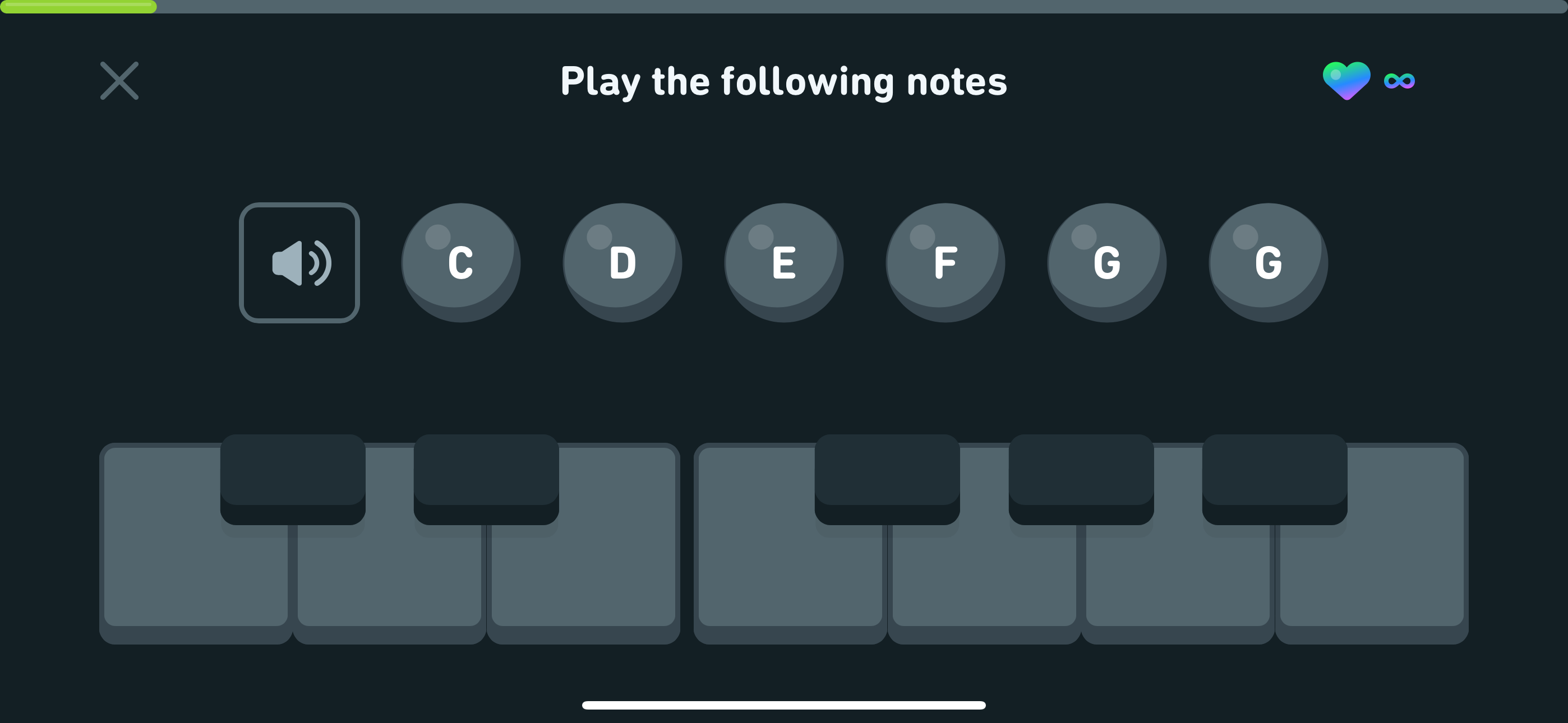
At first I enjoyed playing music on my phone, but I wanted to use a physical keyboard instead. (Image credit: Duolingo)
The first module contains three lessons, and the app teaches you to play short pieces of music on a virtual keyboard to recognize notes, improve your timing, and add more notes to speed up your timing. You can tighten your mind.
I found this much more appealing than a language course. Not only is it fun, but you can put what you learn into practice right away, not only in Duolingo lessons, but also in real-life lessons with your tutor. After a few weeks of using the app's new music features, my piano tutor noticed that I was much better at reading the new songs I covered.
Can you actually give me a lesson?
Around this time, I completely switched from learning languages on Duolingo to music courses. Within a month or two, I was able to skip the tutor's beginner course entirely and started working on more difficult pieces.
I rode this feeling of accomplishment for quite some time, but after a while I started to get frustrated with the stagnant progress on the app. I started the process by learning his 3 notes and now, 4 full months later…I have learned 7 notes. Considering you're doing lessons every day, often multiple times a day, you won't see much progress for your time investment.
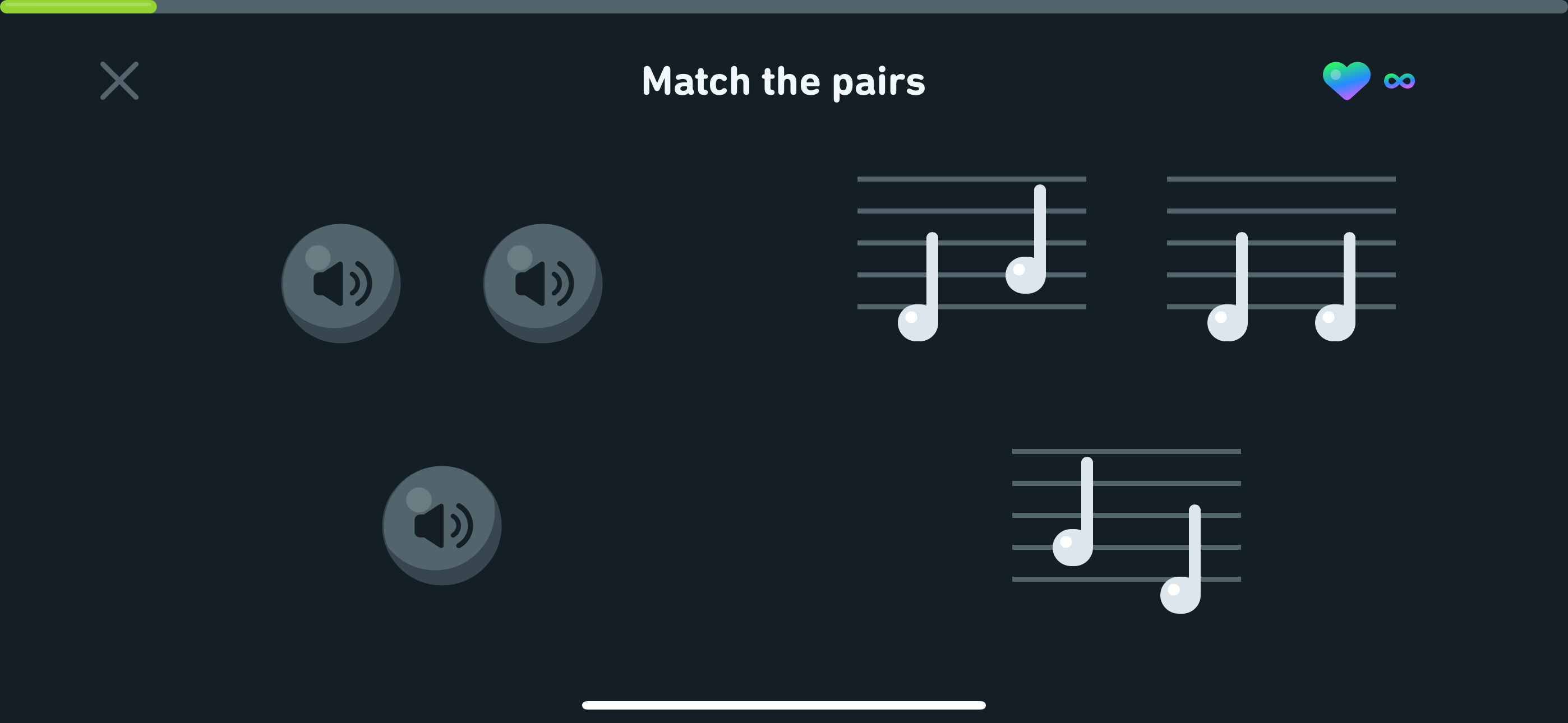
Depressingly, this is very complicated. (Image credit: Duolingo)
In addition to this, once you get past the introductory stage, the lessons start to feel like simple rhythm games, with no real music theory content in sight for now other than “identify these notes.” There were no lessons about chords, scales, octaves, or accidentals. Even if you start playing more difficult songs, the only thing that changes significantly from song to song is the speed at which you play them, but it still doesn't come close to how those songs sound when they're actually played. is. real piano.
The basic blocks at the beginning of the course are very helpful, especially if you have spent little time in formal music lessons. However, as I got a few more sessions deeper with my piano tutor, the app quickly fell behind what we were covering together.
I still continue to use it to keep up my streak (more out of sheer annoyance than anything), but it no longer helps me with my weekly lessons. I decided to buy an actual music theory textbook instead, and it worked wonders compared to what's on the app. In fact, everything I learned in four months on the app was covered in just two pages of the textbook.
Would you recommend it?
If you had asked me earlier in my Duolingo music journey if I would recommend this app, I would have picked up your phone and downloaded it myself. However, being able to compare the app's learning experience to my actual music learning gave me a good insight into how lackluster this app really is.
Even if you read further through the app's lesson plans, you'll likely end up with the same type of boring, repetitive practice. Because of this article, he skipped four modules ahead earlier this week, and barely remembered skipping until Thursday. On Thursday, I was asked to “review” what I had learned previously. What Duolingo taught me, I had already learned on my own a long time ago, so I didn't need a refresher.
I took a quick look at Duolingo's subreddit to see how other Duolingo enthusiasts felt about the new music lessons, and found that most people were just as lukewarm about them as I was. Many users complain about their inability to learn actual music theory beyond identifying notes on a keyboard, and the fact that they can't play connected electronic instruments beyond just tapping the screen (some dedicated music education The app includes this feature). .
There are better apps out there, but I'm wondering if there really is a replacement for in-person music instruction. (Image credit: Kotin, Shutterstock)
As for what could be done to improve it, I'm not really sure what to suggest. Perhaps if Duolingo approached teaching music from a broader theoretical standpoint, rather than trying to make it a piano-specific experience, more people would find it interesting and useful.
This means the lessons will be more intuitive and more varied. Additionally, you won't be limited to just those who want to play the piano or keyboard. In his Reddit thread that I viewed, several people who play other instruments wrote about their disappointment when they found out they couldn't participate in a meaningful way.
All in all, I can't pinpoint what exactly keeps me following Duolingo's music courses. Maybe it's just because I like the track record of getting pretty good grades, but not much more than that at this point. Now, when I sit down to teach, I rarely leave the TV on and look at the screen for more than a few seconds. I used Duolingo music for 4 months and quickly outgrew it.