

Artificial intelligence is more than just a hot topic or a data-driven tool; it's changing the world in unexpected ways. At its simplest, artificial intelligence (AI) combines computer science with robust datasets to enable problem solving. The use of AI has exploded in the past year, even in creative industries such as music.
Great artists like the Beatles are already experimenting with artificial intelligence. The band's last “new” song, “Now And Then”, was created using AI to bring an unreleased demo recording by the late John Lennon to life. The remaining two band members, Paul McCartney and Ringo Starr, released a single in November 2023. “Now And Then” was the last song to feature all four Beatles, and the first and only song released in the 21st century.
Josh Antonuccio, director of the Ohio University School of Media Arts and associate professor of music industry, believes this is just the beginning of AI's impact on music.
“This is a toolset that goes far beyond anything we've seen in human innovation,” Antonuccio said. “The story of the Beatles signals many things in music that will change, and those changes will reverberate throughout the creative industries.”
Ohio University is preparing students to thrive in the new reality of artificial intelligence. Antonuccio oversees a major music industry core class in Ohio State's recording industry curriculum and believes artificial intelligence needs to be part of the conversation. Additionally, at the beginning of the Fall 2023 semester, he created his AI course in Media Production and Storytelling. Antonuccio's goal is to provide a hands-on class with cutting-edge AI tools, allowing students to experiment with different areas such as music production, video editing, transcription, and generative his art platform. That was it.
“I talk about AI in all my classes, but especially in industry, because AI is rapidly starting to change the face of the creative economy,” Antonuccio said.
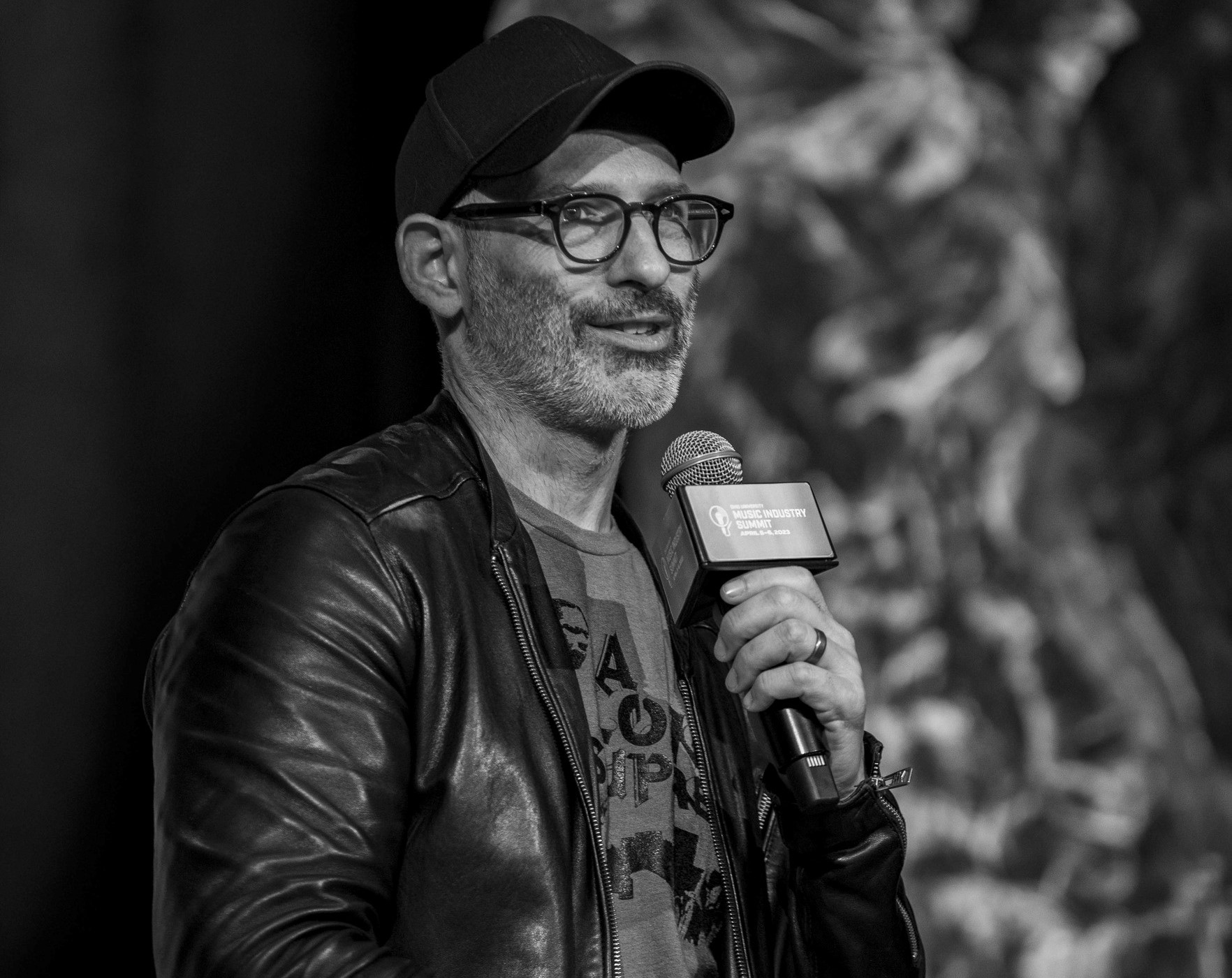
Josh Antonuccio, dean and associate professor in the School of Media Arts, talks about the music industry.
Using AI, musicians and songwriters can generate content in seconds, synthesize similar-sounding vocals, or separate elements on the same track. In the case of the Beatles' “Now And Then,” the AI was primarily restorative, not generative. Software created by Peter Jackson's team during the production of the documentary The Beatles: Get Back uses AI to extract John Lennon's voice from previously unavailable recordings intertwined with noise and piano. was separated.
“When we tried to do 'Now And Then' as part of an anthology series in the '90s, George Harrison played it, but it just wouldn't work in Lennon's demo state,” Antonuccio explained. “[Now] They were able to apply a “demix” technique to separate the vocals, and since Harrison played on that track, it was technically the last song they all performed together. ”
While the Beatles proved with 'Now And Then' that artificial intelligence can provide artists with a cutting-edge toolset to defy mortality, other applications of AI have raised many concerns. Earlier this year, a ghostwriter used an AI voice filter to mimic the voices of Drake and The Weeknd on the song “Heart on My Sleeve” without their consent. The similarities between the two industry giants are uncanny, and Ghostwriter's song became one of the year's biggest and most controversial music stories. Just as AI copying has been a concern for some, this song has started a conversation about what role artificial intelligence can and should play in music and other creative industries. Ta.
“There are big considerations there: not having access to your own voice and likeness, not being able to control how people use your digital images,” Antonuccio said. “This is an ethical consideration and has huge implications for everyone, not just the music industry.”
Antonuccio believes there is another problem that many in the industry are already grappling with: an unprecedented amount of human-generated content being released into the mainstream. Major streaming platforms such as Spotify and Apple Music release around 100,000 to 150,000 of his songs every day. Antonuccio points out that AI will only accelerate the amount of songs entering the market. “Over the next few years, we will be faced with a tsunami of AI-generated songs, from amateur musicians to major artists,” he says. “YouTube Music’s recently announced Dream Track for Shorts and music AI tools are just the beginning of the next phase for the music industry. All three major labels are launching AI-based initiatives in 2023, and this is a harbinger of things to come.”
Many of these streaming platforms utilize AI-based algorithms to deliver music to users. This makes discovering new content a challenge for listeners and nearly impossible for new artists to stand out from the crowd.
Mass-produced songs using AI only add to the noise. In 2016, AI created the song “Daddy's Car,” which generated human-written lyrics in the style of the Beatles. AI analyzed a database of Beatles songs and created similar songs. This song isn't quite as good as the Beatles, but it may become more common for artificial intelligence to create songs based on legacy artists. What will be more interesting, Antonuccio said, is when AI technology makes it possible to create songs that truly move people, or when, ultimately, he believes AI will be on par with some of the best songs ever written. is what happens when used to write songs.
“I think there's a debate about how important humanity is and what that means for the role of the songwriter and the future of creativity,” Antonuccio said. “But art is art, and technology, especially in the last 100 years, has allowed artists to accomplish extraordinary creative feats. AI is now part of that continuum. but with a more powerful toolset.”
This article was originally published on January 2, 2024 and last updated on April 3, 2024.