

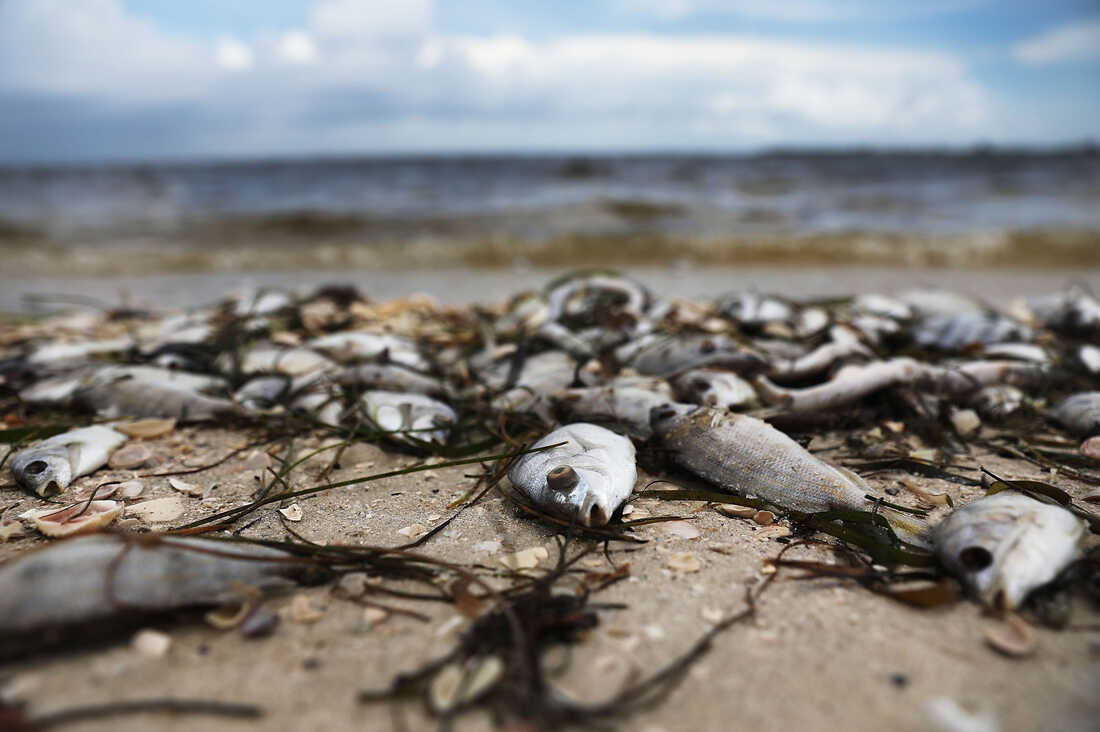
In 2018, dead fish washed up on shore in Sanibel, Florida due to red tide.Joe Radle/Getty Images Hide Caption
Toggle caption Joe Radle/Getty Images
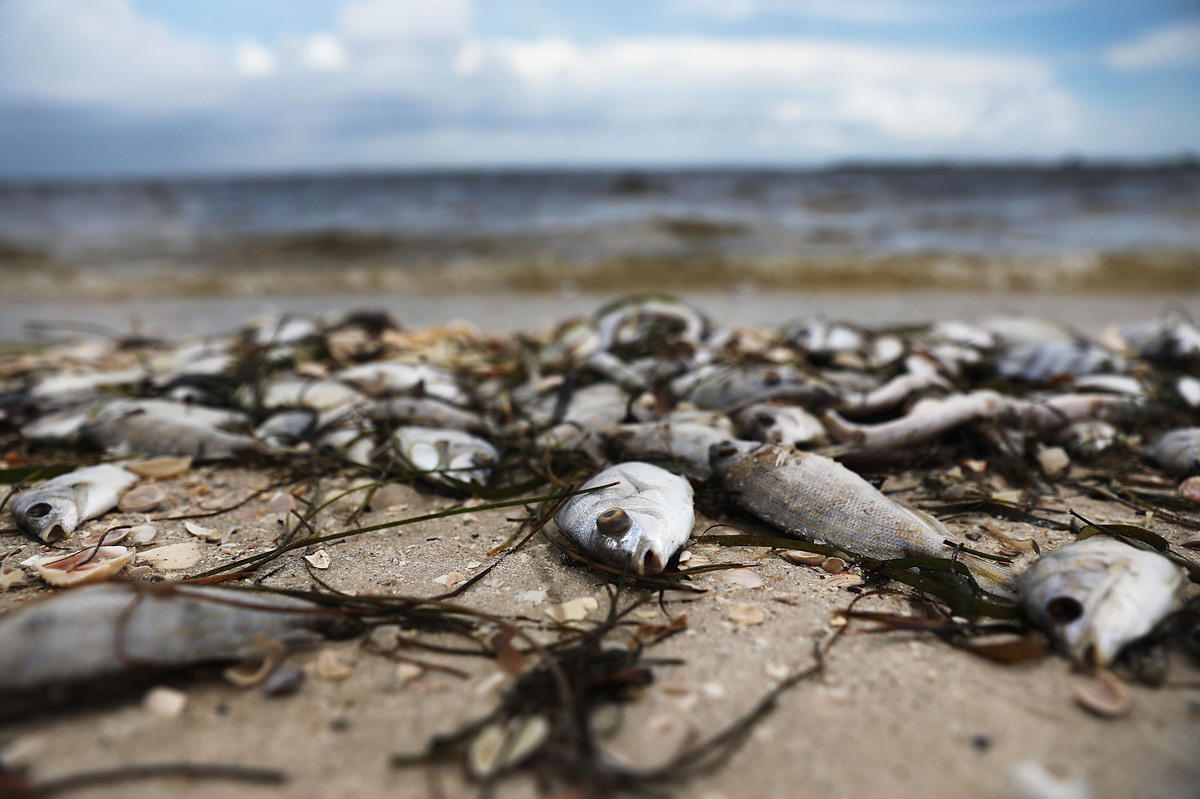
In 2018, red tide caused dead fish to wash up on shore in Sanibel, Florida.
Joe Radle/Getty Images
An anthropology professor at the University of South Florida recently published a paper that almost no one will read. At least, not outside of her field of expertise.
The paper, co-authored with three other professors, was about the impact of algae blooms and coral reef decline on the region's tourism industry. The job was dismal, Heather O'Leary says. This included tracking visitor reactions to the environment on social media.
“Some of the data over several months was just reading tweets like dead fish, dead fish, dead fish,” she recalls. “We were thinking very hard every day about the Gulf of Mexico and surrounding waters, especially St. Pete as a peninsula, those risks, and the risks to our coastal economy.”

But attending a concert at the USF School of Music inspired her and brought her joy. So she contacted band director Matthew McCutchen.
“I study climate change and what's happening with coral reefs,” he remembers her saying. “I have all this data, so I want to know if there's a way to turn it into music.”
There certainly was. Composition professor Paul Lehrer worked with his students to map pitch, rhythm, and length to the data. O'Leary said it came to life in a way that a spreadsheet couldn't.

Matthew McCutchen, Heather O'Leary and Hunter Pomeroy perform in the University of South Florida Symphony Orchestra and Wind Ensemble show at USF Concert Hall. Aiden Michael McKahan/University of South Florida Hide caption
toggle caption Aiden Michael McCahan/University of South Florida

Matthew McCutchen, Heather O'Leary and Hunter Pomeroy perform in the University of South Florida Symphony Orchestra and Wind Ensemble show at USF Concert Hall.
Aiden Michael McKahan/University of South Florida
“My students were really excited to start thinking about how other students, music students, were hearing patterns that they hadn't seen in some repetitions,” she said. say. With music, she added, “you can start to feel in different parts of your mind and body that a pattern is happening and that it's important.”
In this case, she says the pattern reveals the economic impact of pollution on coastal Florida communities. This complex challenge is a symptom of other larger problems. “The world will see more and more of these so-called 'wicked problems.' Solving these problems will require multiple people with different types of training and backgrounds. “We need it,” O'Leary said.

The University of South Florida is excited about this configuration. Other sectors, such as communications, education, and library science, are also becoming involved. A group of faculty and students are currently working on connecting music and the environment in related projects, including an augmented reality experience based on this work. The group, which calls itself CRESCENDO (Communicating Research Broadly Through Sonification and Community Engagement Neuroaesthetics Data Literacy Opportunities), wants to spread awareness about algal blooms, data literacy, and the democratization of science. Masu.
YouTube
Edited for radio and web by Rose Friedman. Created by Beth Novey for her web. Produced for radio by Isabella Gomez Sarmiento.