

April 5, 2024, 13:56 | Updated: April 5, 2024, 14:45
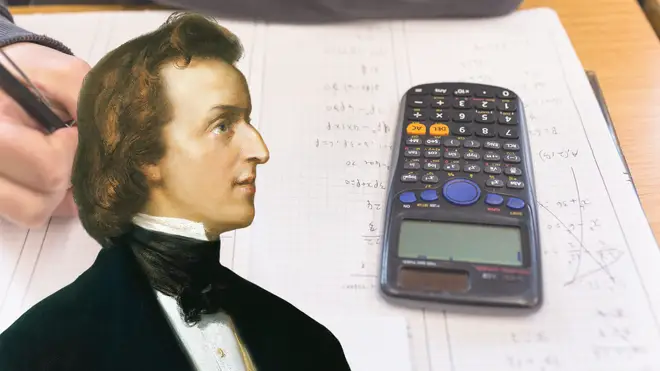
According to this study, Chopin's Nocturnes help students retain memorized information. Photo: Classic FM


If you focus on your homework, classical music could be the key to achieving top grades.
A 2020 US study reported that students who listen to classical music during lectures, studying, or sleeping perform better on exams.
During an online lecture, 50 microeconomics students between the ages of 18 and 33 were asked to conduct a study titled “Classical Music, Educational Learning, and Slow Wave Sleep: A Targeted Memory Reactivation Experiment.” A 15-minute excerpt of the music was played.
Musical excerpts included the first movement of Beethoven's Sonata Moonlight, the first movement of Vivaldi's Spring from The Four Seasons, and Chopin's Nocturne in E flat major.
Half of these participants slept with the same song playing on repeat throughout the night, and the other half slept while listening to white noise.
Researchers found that the group that listened to music performed 18% better on a computer exam the next day.
Read more: Classical Music for Study: 14 Best Songs to Boost Your Brainpower

Evan Le performs Chopin's “Minute” Waltz
The science behind the results is that by listening to classical music, participants activated a process known as “targeted memory reactivation” (TMR), which stimulates the brain to consolidate memories, according to the study. It is said that it shows.
This is the same process that causes memories and emotions to be triggered by the smell of fresh bread, flowers, perfume, etc. However, to be effective, you need to focus on a specific topic, such as university lecturer.
To monitor the electrical activity in the participants' brains, the researchers strapped an electroencephalogram (a network of electrodes) to the participants' heads. The results showed that by improving sleep quality and ability to recall course material, students were more likely to pass the test with a score of 70 or higher. On top of that.
However, these benefits did not extend to a follow-up test 9 months later, when performance returned to its original level, suggesting the process should be repeated.
Read more: Revision Music: The Ultimate Classical Learning Playlist
Previous studies investigating the “Mozart effect” suggested that students who listened to the great composer's music performed better on IQ tests, but recent findings suggest that this This has been shown to be due to increased arousal after listening to lively music in general, not just Mozart's pieces. .
This new study, led by Chenlu Gao, Paul Fillmore, and Michael K. Scullin, suggests that the classical genre can actually be a game-changer in helping students remember important topics covered in class. Masu.
Professor Scullin, director of the Sleep Neuroscience and Cognition Laboratory at Baylor University in Texas, told the Daily Mail: the next day.
“The effect was particularly enhanced in participants who showed increased activity in the brain's frontal lobes during slow-wave sleep, a deep form of sleep.”

Mozart’s turbulent Piano Concerto No. 20 – Ariel Lanyi and 12-piece ensemble | Classic FM’s rising star
Regarding the selection of music used in the study, he added: “We excluded jazz because it's too sporadic and could probably wake people up. We excluded popular music because lyrical music interferes with initial learning. Reading the words… , you can't sing the lyrics, but try.
“They will have a very hard time forming strong connections between the study material and the bland songs and background noise. The songs are very distinctive, so they fit well with the learning materials.”
Scullin and his team hope the new research will not only improve students' concentration and sleep quality, but also encourage more instructors to play classical music during class. Stated.