

Please subscribe to Fox News to access this content
You've reached the maximum number of articles. To continue reading, please log in or create a free account.
By entering your email address and pressing “Continue”, you agree to Fox News' Terms of Use and Privacy Policy, including the Financial Incentive Notice.
Please enter a valid email address.
Having problems? Click here.
Israeli archaeologists recently made a “dramatic” discovery that will provide valuable historical knowledge about Jewish life in Israel during the Roman era, authorities announced.
The Israel Antiquities Authority (IAA) announced the excavation at the site in Lod, central Israel, on Facebook on Sunday. The IAA explained that archaeologists had recently discovered the remains of a “destroyed Jewish public building” that once stood in Syria-Palestine (Roman Palestine).
“Among the various artefacts discovered within the building were impressive stone and marble artefacts, inscriptions in Greek, Hebrew and Latin, as well as an inscription bearing the name of a Jewish man of clerical descent, which is still under investigation,” the IAA said.
“These inscriptions, together with the absence of any pig bones in the bone assemblage discovered at the site, prove that the building had a connection with the Jewish community.”
Archaeologists marvel at 'intriguing' art made by Christian pilgrims 1,500 years ago
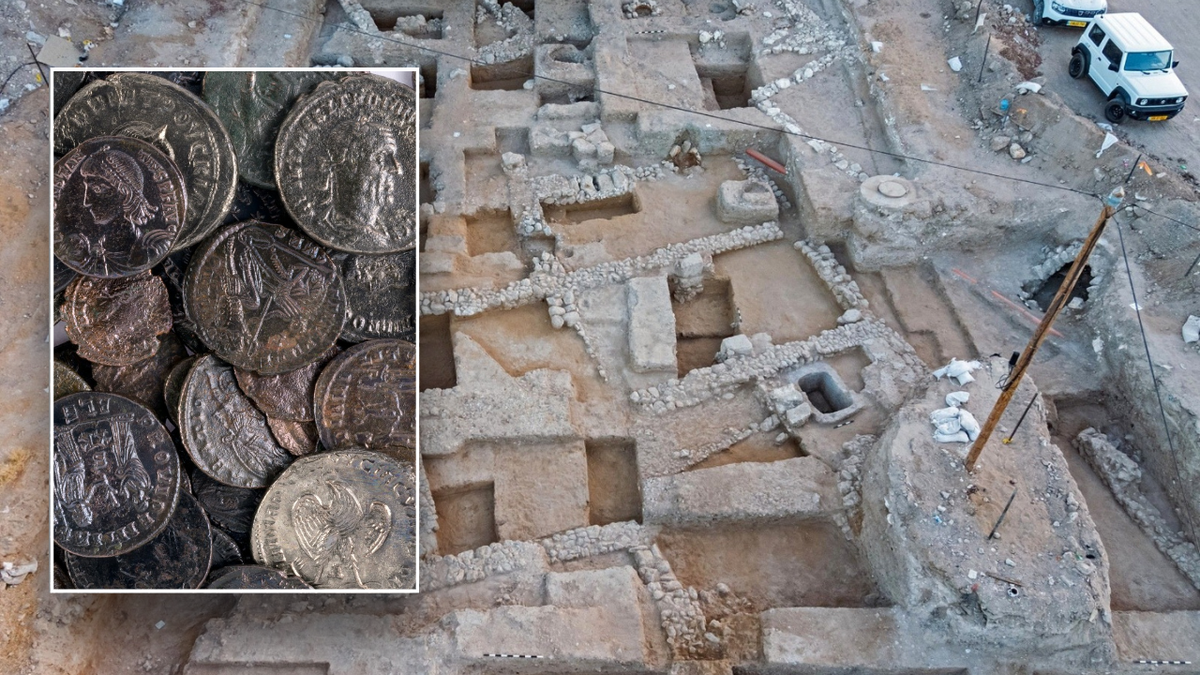
The Israel Antiquities Authority recently discovered a trove of valuable ancient coins during excavations. (Israel Antiquities Authority/Facebook)
Remarkably, excavators discovered a hoard of 94 coins dating back approximately 1,650 years, which the IAA says dates back to the Jewish revolt against Constantius Gallus, which began in 351 AD.
“The newest coins date to the Gallic Revolt (351-354 AD),” the IAA statement explained. “Documentary evidence for this revolt is sparse, but documents indicate that major Jewish communities, such as Lod, Tzipori, and Tiberias, were destroyed by the armies of the Roman Emperor Flavius Constantius Gallus.”
The oldest coins may have been minted in 221 A.D. Historians say the treasure was deliberately hidden during the revolt.
Woman out for a walk stumbles upon once-in-a-decade discovery
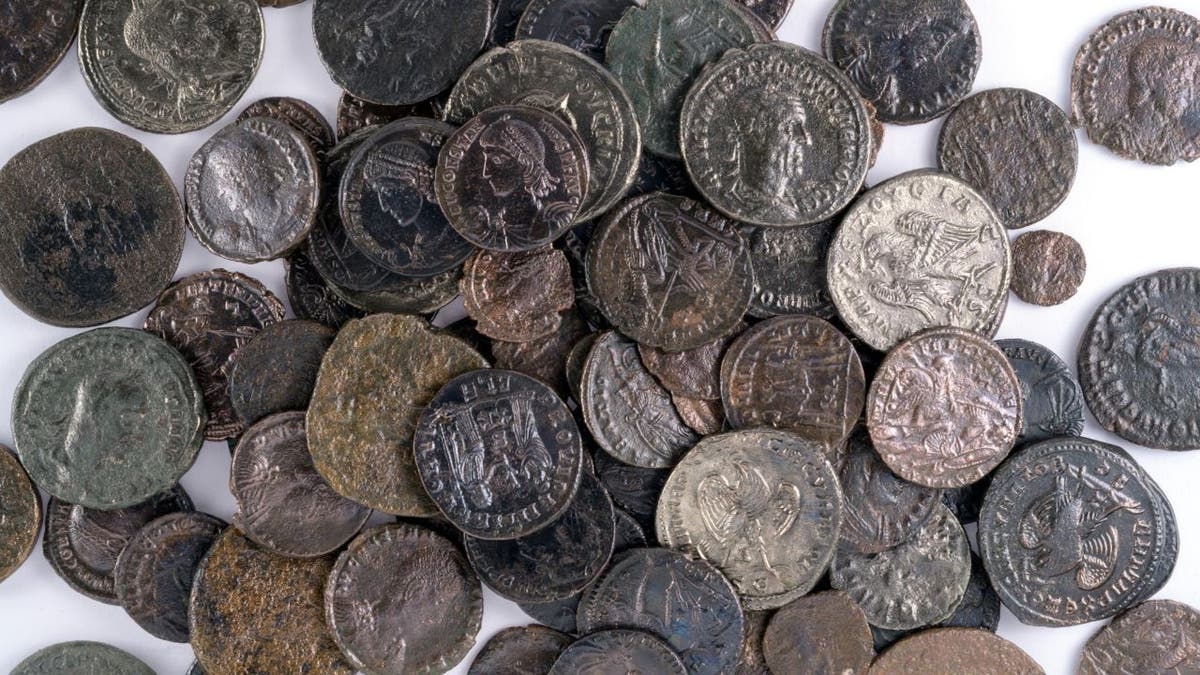
The buried treasure dates back to the Jewish revolt against Constantius Gallus (Israel Antiquities Authority/Facebook)
“[They] It was purposely placed there in the hope that it would be returned to retrieve it once the situation has calmed down,” the IAA said.
The two excavators of the site, Shahar Crispin and Mor Wiesel, said in a joint statement that the “magnificent” building probably served as living quarters for the city's Jewish elders.
“We know from Talmudic sources that Lod was the most important Jewish center after the destruction of the Second Temple in Jerusalem,” the statement explained. “The building, razed to its foundations, clearly indicates that the revolt was forcibly put down with violence and brutality, and was not merely a local uprising, as previous studies have argued.”
Click here to sign up for our lifestyle newsletter
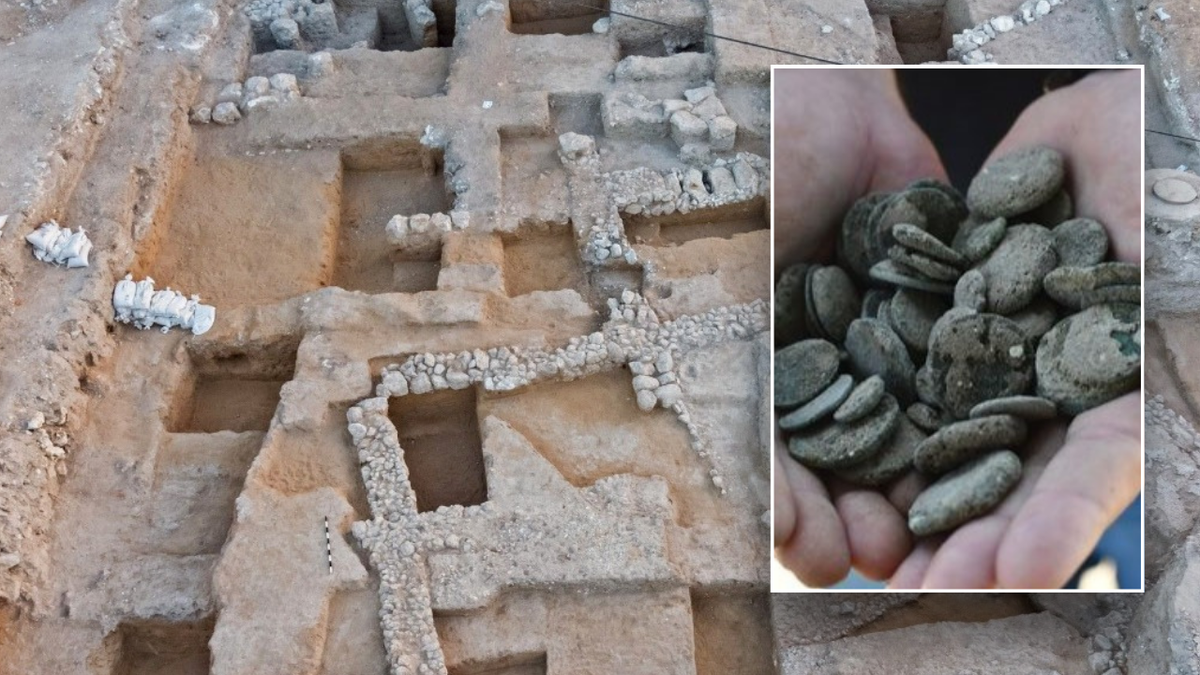
The excavation site also uncovered centuries-old coins, as well as stone and marble artifacts. (Israel Antiquities Authority/Facebook)
“This is the only evidence so far of the scope and power of this rebellion in Lod, which is in the heart of the country.”
Lod Mayor Yair Revivo called the discovery “very moving.”
“[It is] “This is a new link between the Tannaitic heritage of Lod, the hometown of the author of the Mishnah, and the history of the Jewish people in Lod,” the mayor said. “Discoveries in this area prove that Lod is one of the oldest cities in the world.”
For more lifestyle stories, visit www.foxnews.com/lifestyle
Professor Joshua Schwartz of the Israel Antiquities Authority's Council of Archaeologists said the find raised further questions.
“It is difficult to determine whether this magnificent building served as a synagogue, a study hall, a meeting place for the elders, or all three functions combined,” Schwartz explained, “but it is clear that the building's size, the coin hoard, and the archaeological finds uncovered during the excavations fit well with descriptions of Lod/Diospolis in both Jewish and non-Jewish sources as a center of Torah-following Jewish life during the Mishnaic and Talmudic periods.”

Mayor Yair Revivo of Lod holds an ancient coin. (Israel Antiquities Authority/Facebook)
Click here for the FOX News App
“The Lod continued its role as a leading community of elders from its destruction until this moment, when it was brutally destroyed in the Gallus Rebellion,” Schwartz said.