

Chancellor Olaf Scholz announced that Germany would begin deporting criminals following a deadly knife attack by an Afghan migrant. The attack in Mannheim left one police officer dead and four injured. The attacker had entered Germany as an asylum seeker in 2014.
Chancellor Olaf Scholz vowed Thursday that Germany would resume deportations of criminals from Afghanistan and Syria after a knife attack by an Afghan migrant last week left one police officer dead and four injured.
The brutal attack in Mannheim was captured on video and quickly spread online, sending shock waves across the country.
Scholz addressed parliament in a security-focused speech on Thursday, just days before European elections that are expected to see major gains for far-right populists across the continent.
German right-wing candidate stabbed in latest attack ahead of elections
“I am outraged when people who have sought protection commit the most serious crimes. Such criminals must be deported, even if they are from Syria or Afghanistan,” the prime minister said, to applause from lawmakers.
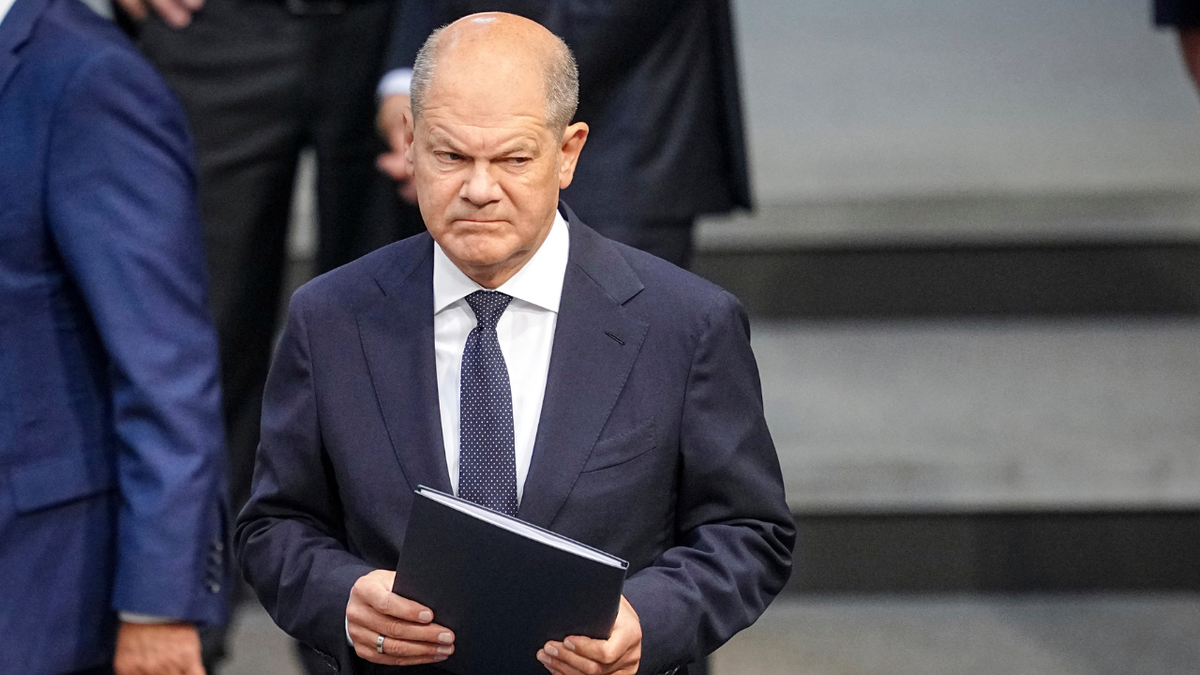
German Chancellor Olaf Scholz attends a meeting of the German Bundestag in Berlin on June 6, 2024. Following a knife attack by an Afghan migrant last week that left one police officer dead and four injured, Scholz vowed Thursday that Germany would resume deportations of criminals from Afghanistan and Syria. (Kay Nietfeld/DPA via The Associated Press)
The 25-year-old attacker, who killed a 29-year-old police officer who tried to stop him, came to Germany as an asylum seeker in 2014.
“There are no serious criminals or terrorist threats here,” Scholz added. “In such cases, Germany's security interests outweigh the interests of the perpetrators.”
Immigration has been a key theme in European election campaigns, with far-right and mainstream parties alike using it to win votes from Europeans frustrated by millions of new immigrants seeking refuge from war, famine and climate change, or simply trying to build a better future for themselves.
Commenting on Friday's knife attack, Scholz said: “The fatal knife attack on a young police officer in Mannheim is the manifestation of radical Islamist and misanthropic ideology. There is only one word for it: terrorism. Let's declare war on terrorism.”
Anti-Muslim activist stabbed in Germany, attack caught on video
Germany does not currently carry out deportations to Afghanistan or Syria: the German government does not have diplomatic ties with the Taliban in Kabul and considers the security situation in Syria too unstable to allow deportations.
But in her speech, the chancellor said the government was already working on a solution that would allow convicted Afghans to be deported to Afghanistan's neighbours, amid a debate in Germany over whether to again allow deportations to Syria.
Scholz also promised that deportation rules for anyone who carries out or supports terrorism would be tightened as well.
It is unclear how quickly Germany can or even if it can deport foreigners who have committed crimes, as political decisions are often delayed by cumbersome bureaucracy.
“The time for warnings and condemnations, denials and announcements is over,” said Friedrich Merz, opposition leader of the conservative Christian Democrats. “The people expect us to act. They expect decisions.”

A migrant with a knife is seen on video stabbing multiple people in Mannheim, Germany, May 31, 2024. (Buergerbewegung Pax Europa)
Britta Hasselmann, parliamentary leader for Scholz's green Green party, which is in his governing coalition, questioned how realistic the chancellor's deportation plan was.
She said negotiating an expulsion deal with the Taliban and Afghanistan's neighbors would be difficult.
“We need to consider which third countries should be attractive to host terrorists and serious criminals, and I look forward to seeing the answer,” she said.
Click here to get the FOX News app
Many Germans initially welcomed the influx of more than a million migrants from Syria, Afghanistan and Iraq in 2015-2016 following war and unrest in their home countries, but that mood has changed in recent years.
Germany's far-right Alternative for Germany (AfD) party has successfully exploited fears about immigration among some Germans, but in recent months millions of Germans have taken to the streets to protest radical plans by the party to power to deport millions of migrants, including those with German passports.
The party has seen its popularity fall in recent opinion polls due to a series of scandals in the European Parliament elections over alleged close ties between its leading candidates and Russia and China, as well as the repeated use of Nazi slogans by one of its senior members.
Chancellor Olaf Scholz and his Social Democrats, as well as other mainstream parties, have sought to portray themselves as tough on immigration and radical Islam, to discourage voters from turning to the AfD to tackle immigration-related issues.